From Heartbreak to Hope: One Mother’s Powerful Mission
- 15 hours ago
- 4 min read

There are moments in life that divide everything into before and after.
For Northern Beaches mother, autism advocate and founder of Different Angles, that moment came sitting inside a specialist’s office while holding her two-year-old daughter, Emily.
Only months earlier, Emily had been speaking, smiling and connecting with the world around her. Then, almost suddenly, everything changed.
“She lost all her words. Every single one,” she says quietly.
“She stopped responding to her name. Her eye contact disappeared. It felt like I was watching my little girl disappear in front of my eyes.”
At first, people reassured her it was likely linked to the COVID lockdowns and lack of social interaction. But deep down, she knew something was wrong.
“As a mother, I just knew,” she says.
After multiple specialists and countless appointments, she finally secured a consultation with a highly regarded paediatric psychiatrist specialising in autism.
What followed would change the course of her life forever.

“After only a short interaction with Emily, she looked at us and said, ‘She is severely autistic.”
The diagnosis was Level 3 autism with likely intellectual disability. The prognosis was devastating.
“She told us the chances of Emily speaking one day might be less than five per cent.”
The words shattered her world.
“I remember thinking, ‘My little girl? This is impossible.’”
But amid the heartbreak came one sentence that would ultimately redefine her future.
“I asked, ‘How much can she improve?’ and the doctor replied, ‘As much as your effort.’”
She still carries those words with her today.
“Sometimes I think it was both a blessing and a curse,” she says.
“It gave me hope, but it also placed the weight of the world on my shoulders.”
Like many parents navigating an autism diagnosis, she entered a world few people around her fully understood. The grief was not about Emily herself, but the fear, uncertainty and loss of the future she had imagined.
“I don’t think people talk enough about the grief that can come with a diagnosis,” she says.
“Not grief because your child is autistic, but grief for the expectations and dreams you carried.”
The months that followed became a blur of therapies, research, funding applications and exhaustion. She drove across Sydney almost daily to access speech therapy, occupational therapy and Early Start Denver Model intervention.

“Northern Beaches to Bondi, Bondi to Ryde, Ryde to Hurstville. Some weeks I was driving more than ten hours just trying to get my daughter every possible chance.”
At night, when the world went quiet, the loneliness would hit hardest.
“I would stay awake until two or three in the morning researching autism while crying silently so nobody would hear me.”
To manage Emily’s growing therapy schedule, she stepped away from her management role in engineering and took a lower position that offered more flexibility. Financially and emotionally, the pressure was immense.
Yet beneath the exhaustion, something else slowly began to emerge.
Purpose.
“I realised Emily only spent a few hours each week with therapists, but I was with her every single day,” she says.
“I thought, what if I learn how to do this too?”
Already highly academic with a PhD and research background, she threw herself into evidence-based learning. What began as a mother’s desperate search for answers evolved into an entirely new career path.
She enrolled in a Master of Autism, undertook specialist Early Start Denver Model training and later completed counselling studies focused on inclusion and diversity.
“These qualifications were never about titles,” she says.
“They were tools. Tools to help my daughter. Tools to help other families.”
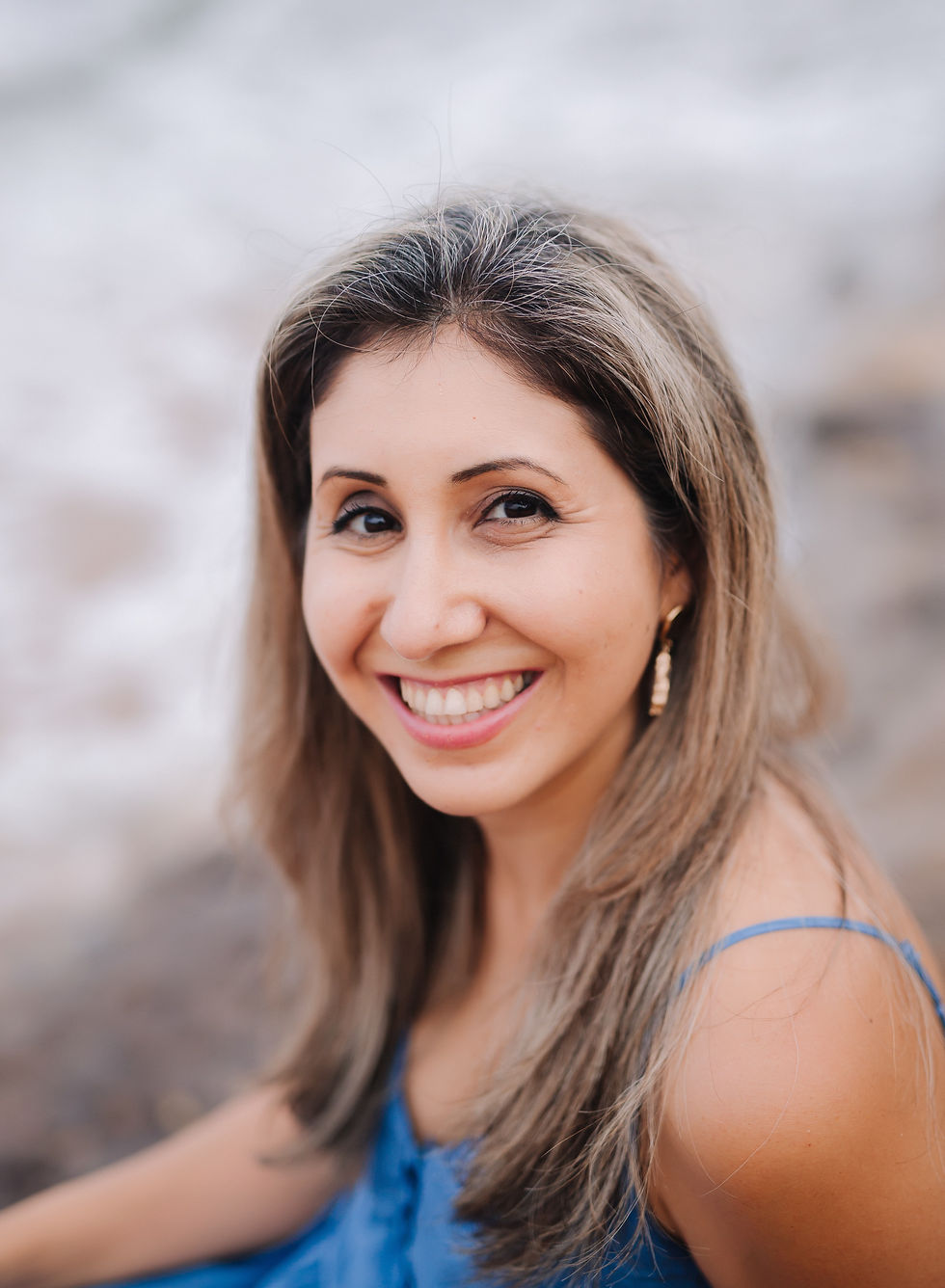
Slowly, through years of intensive therapy, connection, play and consistency, Emily began speaking again.
“First words. Then phrases. Then sentences,” she says.
“Every single word felt like a miracle.”
Today, that deeply personal journey has become the foundation of her business, Different Angles, a Northern Beaches-based support service grounded in neurodiversity-affirming care and human connection.
The name itself reflects a philosophy she now lives by.
“So much of the world looks at neurodivergent people through a deficit lens,” she says.
“What they can’t do. What needs fixing. But I wanted people to stop and look again from another angle.”
For her, inclusion is not simply policy or theory. It lives in ordinary moments.
“A child being welcomed into a birthday party without conditions. A teacher taking the time to understand instead of punish. A parent not feeling like they have to apologise for their child existing.”
She believes society often focuses too heavily on changing neurodivergent people rather than examining the environments around them.
“A person using a wheelchair feels far more disabled in a building without a ramp,” she says.
“I think it’s very similar for neurodivergent people.”
Now working closely with children, teenagers, adults and families, her days are varied but deeply human. Some involve therapy sessions and advocacy meetings. Others simply involve listening to exhausted parents who finally feel understood.
“That human connection is probably the most meaningful part of my work,” she says.
“I know what it feels like to sit on the other side feeling completely lost.”
She also recently launched a free weekly community support hour at Mind Café in Narrabeen, offering parents and carers a safe, judgement-free space to talk, ask questions or simply breathe.
“Sometimes people don’t need fixing,” she says.
“They just need someone to sit beside them and say, ‘You are not failing.’”

As for Emily, the little girl doctors once believed may never speak is now continuing to grow, learn and surprise everyone around her.
And for the mother who once walked out of that specialist’s office feeling like her world had ended, life today looks very different from what she once imagined.
But perhaps more meaningful too.
“If I’ve learned one thing,” she says, “it’s never say never.”
“Sometimes the journey may not look the way you imagined, but that does not mean it cannot still be beautiful.”


Comments