Sun, Salt and Seriously Good Hair: Your Northern Beaches Summer Survival Guide
We love summer on the Northern Beaches, but between the ocean, chlorine, humidity and our healthy addiction to beach days, our hair doesn't always share the enthusiasm. Here's how to keep your locks looking fabulous without giving up the things we love most about summer.

There's something about summer on the Northern Beaches that makes everything feel a little easier. The days get longer, shoes become optional and an afternoon swim can somehow turn into sunset drinks without anyone feeling the need to go home and change.
And while we're all embracing that effortless, salty-haired beach goddess look, our actual hair might be quietly begging for help.
Because as much as we love the ocean, the sun and the occasional dip in the pool, they're not necessarily doing our crowning glory any favours.
By February, what started as beautifully tousled beach waves can resemble something closer to a neglected straw broom. And if you've spent a small fortune getting your blonde just the right shade, watching it turn dry, brassy or, heaven forbid, slightly green, is hardly the summer transformation you had in mind.
The good news is that enjoying summer and having beautiful hair don't have to be mutually exclusive. A few simple habits can make a surprisingly big difference, and the best place to start is before you've even put a toe in the water.
One of the easiest tricks is to wet your hair with fresh water before diving into the ocean or pool. Hair absorbs water, so starting with fresh water can help reduce how much salt or chlorinated water it takes up.
Think of it as giving your hair a drink before heading out for cocktails.
If your hair is blonde, coloured or particularly dry, applying a little lightweight leave-in conditioner beforehand can also help reduce tangling and friction. Just remember that conditioner isn't a substitute for sun protection. Your scalp still needs a hat or suitable sunscreen, and it's worth checking any UV-protection claims on hair products rather than taking them at face value.
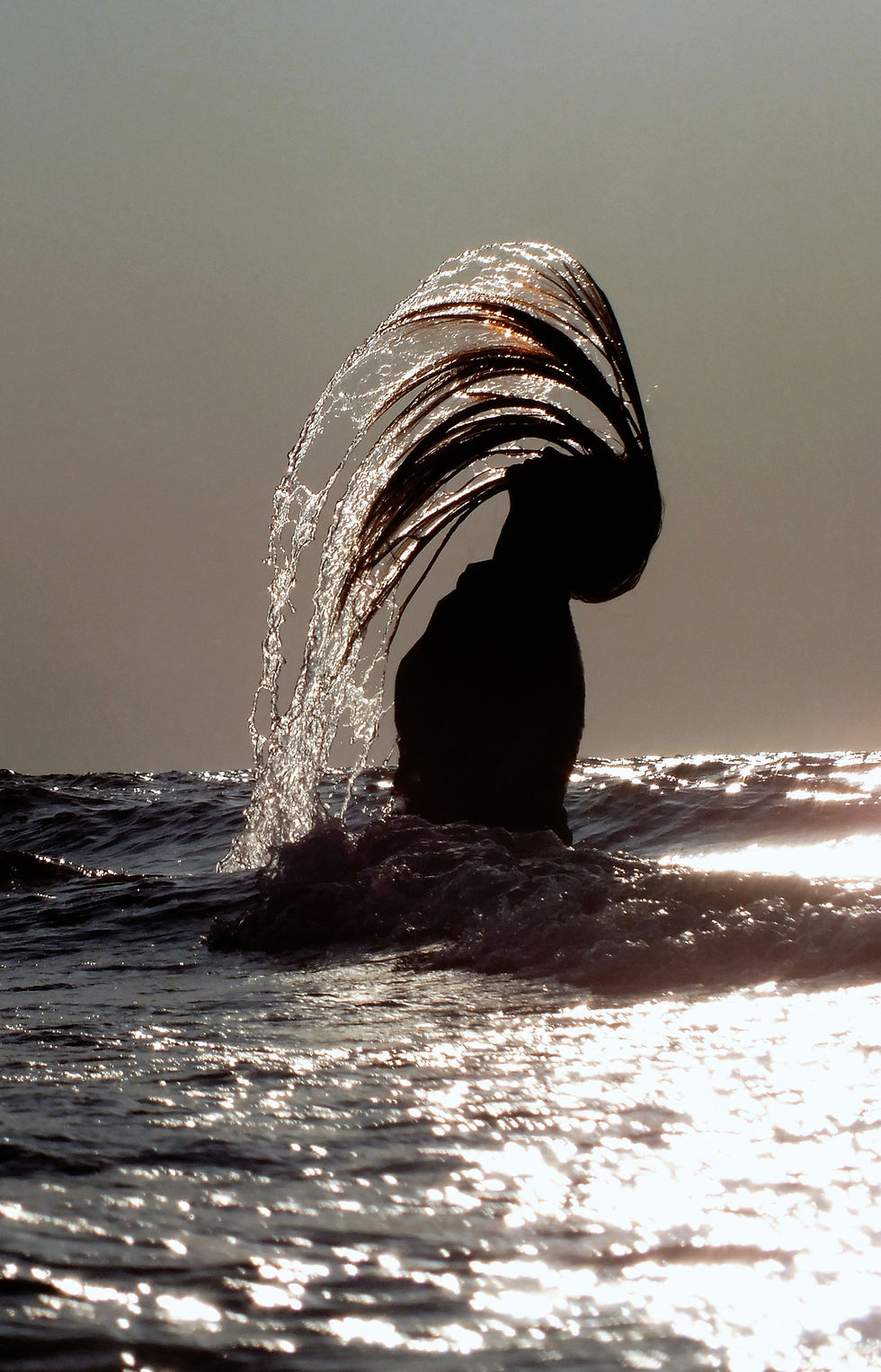
Of course, what happens after your swim is just as important.
We've all done it. You emerge from the ocean, squeeze the water out of your hair, throw it into a messy bun and carry on with your day. By the time you get home, the salt has dried, your hair has turned into a tangled bird's nest and brushing it feels like an extreme sport.
Salt water can leave hair feeling rough and dehydrated, particularly if it's already porous or chemically treated. Add wind, sand and repeated swimming to the equation and you've got a recipe for tangles and breakage.
The simplest solution is also one of the cheapest. Give your hair a thorough rinse with fresh water as soon as you can after swimming. You don't necessarily need to shampoo every time you take a dip, particularly if you're swimming daily, but a gentle shampoo when needed and a good conditioner will help keep your hair in better condition.
If you're spending a lot of time in chlorinated pools, an occasional clarifying or swimmer's shampoo can help remove mineral and product build-up. Just don't overdo it, especially if your hair is coloured or already dry.
And please resist the temptation to attack wet, tangled hair with a brush. Wet hair is more vulnerable to stretching and breakage, so use a little leave-in conditioner or detangling spray and gently work through knots with a wide-tooth comb or suitable detangling brush, starting at the ends and gradually moving upwards.
Your hair will thank you for it.
Then there's the blonde dilemma.
Living on the Northern Beaches, it's practically a local tradition to spend considerable time and money achieving the perfect blonde, only to spend the next three months exposing it to everything that can undo the good work.
Sunlight can contribute to colour fading, while repeated swimming and washing can leave already lightened hair feeling increasingly fragile. Pool water presents another challenge, particularly for porous blonde hair, which can sometimes develop a greenish tint.
Contrary to popular belief, it's not the chlorine itself turning your hair green. The usual culprit is copper in the pool water, which can attach to porous hair and leave behind an unwanted greenish colour.

And let's face it, mermaid green isn't quite the same look as expensive salon blonde.
If you're planning to spend summer alternating between the beach and the backyard pool, a colour-protecting shampoo and conditioner, along with a weekly hydrating treatment, can help keep your hair feeling softer and looking its best.
Purple shampoo can also help neutralise unwanted yellow tones in blonde hair, but it's not something you necessarily need to use every wash. How often you need it depends on your colour, your hair's condition and the product itself.
And if your blonde does start looking suspiciously green after a swim, don't panic. A specialist swimmer's treatment may help remove copper build-up, although it's worth speaking to a hairdresser before experimenting with DIY remedies that could make matters worse.
While we're talking about things that quietly sabotage our hair, can we please discuss the humble messy bun?
It's the unofficial hairstyle of summer. Perfect for swimming, school drop-offs, Pilates, coffee runs and those days when washing your hair feels like an unreasonable demand.
Unfortunately, repeatedly pulling wet hair into a tight bun or ponytail can put unnecessary tension on already vulnerable strands, particularly around the hairline.
A loose plait, soft scrunchie or gentle claw clip can be a kinder option, depending on your hair type. And if you've been wearing your hair in the same tight style every day, give it a break occasionally.
As for heated styling tools, summer might be the perfect excuse to put them away for a while.
Between the sun, swimming and humidity, our hair already has enough to contend with without adding endless blow-dries, straighteners and curling irons to the mix.
Embracing your natural texture, using a little lightweight leave-in conditioner or styling cream and allowing your hair to air-dry when practical can help reduce additional heat damage.
That said, air-drying isn't automatically damage-free either. Avoid leaving your hair tightly tied up and soaking wet for hours, and be gentle while it's drying.
For an easy summer look, you really can't go past a relaxed braid, low ponytail or loose bun. They're practical, take very little effort and look perfectly at home whether you're heading to the beach or meeting friends for lunch.
The biggest mistake is often overloading hair with products in an attempt to fight frizz, only to end up with something that looks flat or greasy.
Start with a small amount of lightweight leave-in conditioner or anti-frizz serum, concentrating on the mid-lengths and ends rather than the roots. You can always add more if you need it.
And perhaps it's time we stopped fighting every flyaway.
A little texture, a few loose strands and the occasional windblown fringe are all part of the summer look. Nobody wants to spend half their beach day worrying about whether their blow-dry is surviving the sea breeze.
But beautiful summer hair isn't only about what we put on it. What we put into our bodies matters too.

Before you start spending your entire pay packet on expensive hair treatments and miracle supplements, it might be worth taking a look at what's on your plate.
Hair is largely made from a protein called keratin, and our bodies need adequate protein, iron, zinc and other nutrients to support normal hair growth. While no particular food will magically transform your hair overnight, a balanced diet can help keep it healthy.
Eggs are a convenient source of protein and biotin, while fish such as salmon and sardines provide protein and omega-3 fats. Nuts and seeds offer a range of nutrients, and leafy greens, legumes and lean meats can contribute iron and zinc.
If you're vegetarian or vegan, there are plenty of plant-based options too, including tofu, lentils, beans, nuts and seeds.
And here's some good news for anyone who considers avocado on toast an essential part of the Northern Beaches lifestyle. Avocados provide healthy fats and vitamin E, although eating them won't miraculously repair split ends.
The important thing is getting enough nutrients overall, rather than chasing individual so-called superfoods.
Unless you have a diagnosed deficiency, there's little evidence that taking high-dose hair supplements will give you thicker, shinier locks. Some supplements can even cause problems when taken unnecessarily.
Hydration matters for your general health too, especially on hot summer days, although drinking extra water beyond your body's needs won't directly moisturise damaged hair.
So enjoy the smoothie, order the eggs and avocado, and perhaps remember to eat something between your morning swim and afternoon coffee.
Of course, there's one part of our head we tend to forget about until it's too late.
Our scalp.

It's remarkably easy to spend an entire day at the beach carefully applying sunscreen to our faces, shoulders and legs while leaving the parting in our hair completely exposed.
And anyone who has ever experienced a sunburnt scalp knows it's a mistake you generally only make once.
The scalp is skin, and it needs sun protection just like the rest of us. A broad-brimmed hat offers useful protection, while exposed areas such as the parting and hairline should be covered with an appropriate SPF 50 or 50+ sunscreen. Remember to reapply according to the product instructions, particularly after swimming.
A healthy scalp also benefits from gentle cleansing, especially when sweat, sunscreen and styling products have been building up during long summer days.
But there's no need to scrub it into submission. If your scalp is persistently itchy, flaky, painful or irritated, it's worth getting professional advice rather than assuming another expensive hair treatment will solve the problem.
And finally, perhaps the most important thing to remember is that healthy hair doesn't have to look like you've just stepped out of a salon.
There's something wonderfully liberating about summer hair on the Beaches. A little texture, a few flyaways and the occasional windblown fringe are all part of the charm.
The secret isn't a complicated routine or a bathroom full of expensive products. It's finding a few simple habits that work with your lifestyle rather than against it.
Protect your hair and scalp from the sun, keep your hair conditioned and give it a good rinse after swimming. Be gentle when detangling, ease up on the heat styling and don't underestimate the difference a regular trim can make to the appearance of dry, damaged ends.
Most importantly, remember that summer should be about early morning swims, sandy feet, long lunches, salty air and staying at the beach until the sun starts to disappear.
Not spending February desperately trying to rescue your hair from everything you did to it in January.
And if all else fails, there's always a fabulous hat.



Comments