ALOHA: Bringing Back the Good Old Days of Surf, Sun, Rock ’n’ Roll and Chiko Rolls

There was a time when summer on Australian beaches was a religion, your mates were your congregation and the beach was pretty much the centre of the universe.
Long before smartphones, social media and the ridiculous notion that every moment needed to be photographed, filtered and shared, life was wonderfully uncomplicated.
You woke up, checked the surf, grabbed your board and headed for the beach. If the waves were pumping, you stayed. If they weren't, you stayed anyway.
There were no group chats to organise a catch-up, no Google Maps to tell you where to go and certainly no Find My Friends. If you wanted to find your mates, you headed to the beach, the corner shop or wherever someone's battered old panel van happened to be parked.
And if you were lucky enough to have a mate with a shaggin' wagon, preferably one with curtains, a questionable mattress in the back and a cassette player that worked, well, summer was looking pretty good.
Those were the days of scorching hot bitumen burning the soles of your feet, salty hair that hadn't seen a brush in days, Chiko Rolls, hot chips wrapped in paper and an ice-cold can of Solo.
A couple of bucks could keep you fed for the afternoon, nobody wore shoes unless absolutely necessary, and the biggest decision of the day was whether to go back in for another surf or head to the pub.

The soundtrack was just as important as the surf. Midnight Oil, INXS, Cold Chisel and The Angels were belting out of car stereos and local pubs, while surf films transported us to far-flung breaks most of us could only dream of visiting.
But this era gave us more than wonderful memories. It helped define Australian surf culture, producing legends including Nat Young, Midget Farrelly, Tom Carroll, Barton Lynch and Layne Beachley. Local pubs launched some of Australia's biggest bands, when surfboard factories were shaping boards that would change the sport forever.
It was a time when surfing wasn't simply something you did. It was who you were, where you belonged and, for many of us, how we grew up.
Of course, Australia has changed enormously since then. The panel vans have largely disappeared, the corner shops have become cafés selling $8 coffees, and the kids who once spent their afternoons hanging around the beach are now parents, grandparents and, in some cases, still hanging around the beach.
But that unmistakable beaches spirit has never really gone away.
And now one lifelong Sydney local wants to bring it all back.

On Saturday 6 March 2027, Sydney’s coastline is set to come alive with ALOHA Festival, an ambitious celebration of surf culture, live music, iconic surf films and the laid-back Australian beach lifestyle.
The brainchild of fourth-generation Northern Beaches local Luke Campbell, the proposed festival aims to draw up to 15,000 people to Dee Why’s James Meehan Reserve for a day of music, entertainment and nostalgia, bringing together generations of surf lovers, music fans and families for a celebration of everything that makes Australian beach culture so iconic.
For Campbell, who grew up at Long Reef with the surf breaks of Dee Why Point practically on his doorstep, the idea has been years in the making.
"The Northern Beaches has an extraordinary history of bringing people together through surfing, music and culture, yet we haven't had a major large-scale festival that truly celebrates all three in one place for decades," he says.
Campbell knows the territory. A former sports journalist who moved into live broadcasting, events and production, he has spent much of his life working in the industries he loves.
In Hawaiian culture, aloha carries a meaning far deeper than a simple greeting. It speaks to love, compassion, respect and connection, values that Campbell believes have always been part of the Northern Beaches way of life.

But while the festival is designed to celebrate the good times, its origins are tied to one of the darkest moments in the local surfing community's recent history.
In September 2025, much-loved Long Reef surfer Mercury "Merc" Psillakis was killed in a shark attack at Dee Why Beach.
Campbell, who had known Merc for decades, was surfing about 100 metres away when it happened.
"It was a moment that our community will never forget, and I remember thinking afterwards about how easily it could have been me," he recalls.
The tragedy occurred just a week before the Australian Surf Film Festival. Campbell and his team considered cancelling the event but, with the blessing of the Psillakis family, decided instead to dedicate it to Merc.
What followed was an extraordinary show of community support.
Surfers, friends and families came together to remember a man who had spent so much of his life in the ocean. For Campbell, the experience reinforced something he had always believed about the Northern Beaches: when things get tough, people show up for each other.

"The festival provided a platform for everyone to come together, remember Merc, support one another and, for a few hours, feel connected during an incredibly difficult time," he says.
"That experience made me realise we could do more."
And so ALOHA began to take shape, not simply as another music festival, but as something that might help reconnect a community with the ocean and with one another.
Naturally, the music and surf films are a major drawcard. Campbell is promising internationally recognised artists, some of the world's best surf films and a line-up that he believes will be unlike anything the Northern Beaches has experienced before.
But he's equally enthusiastic about what will happen away from the stage.
Plans include a shark education and mitigation hub, environmental initiatives, mental health and wellbeing activities, Indigenous cultural celebrations, markets, food stalls, live DJs and family entertainment.
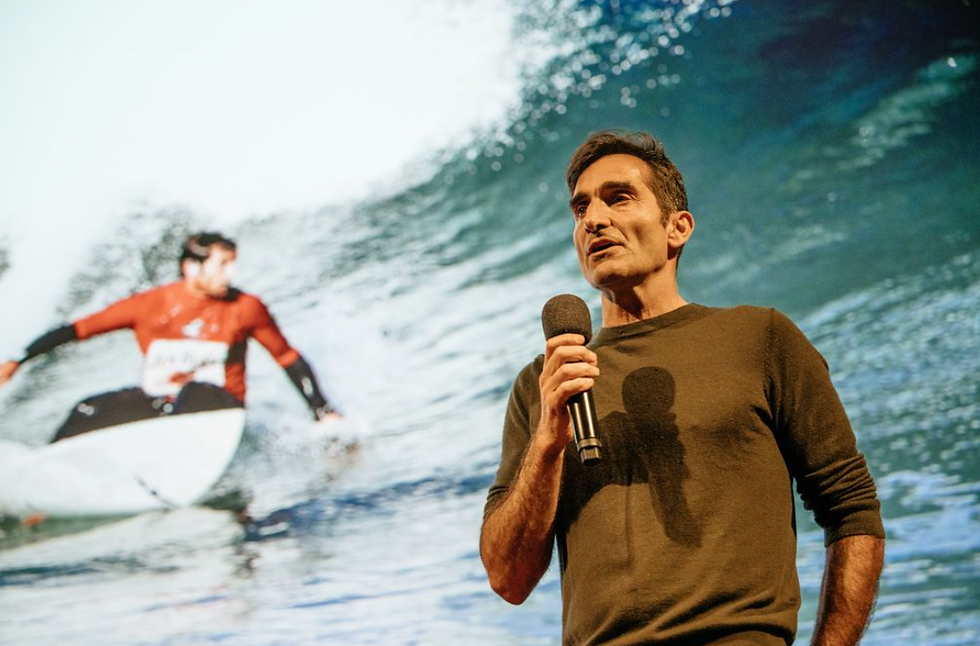
There's even a proposed golf simulator offering a $50,000 hole-in-one prize, alongside carnival attractions for the kids.
In other words, you could arrive for the music and find yourself spending half the afternoon doing something completely unexpected.
"The idea is that you can come for one thing and discover ten others," Campbell explains.
"We want ALOHA to feel less like a festival you simply attend and more like a world you step into for the day."
The shark education component is particularly important.
For a community whose identity is so closely tied to the ocean, recent shark incidents have left many people understandably shaken. Campbell believes there needs to be more practical information and less fear.

Working alongside government agencies and community organisations, the festival aims to help people better understand ocean safety, shark behaviour, surveillance technology and the tools available to beachgoers.
Mental health is another priority, with Gotcha4Life and Blue Minds among the organisations involved in the proposed program.
Campbell sees a natural connection between the ocean, wellbeing and belonging. Anyone who has ever gone for a surf after a terrible day probably understands exactly what he means.
Sometimes the ocean doesn't solve your problems, but it certainly has a way of putting them into perspective.
ALOHA will also bring environmental organisations including Surfers for Climate and Take 3 for the Sea into the festival experience, with practical initiatives focused on protecting the coastline and reducing plastic pollution.
And through its involvement with the Bush to Beach program, Campbell hopes to give children from remote NSW communities the chance to experience not only the ocean, but also a major music and surf festival.

For some, it may be their first opportunity to learn to surf or see the ocean at all. Campbell is particularly excited about the possibility of those children meeting successful First Nations musicians, filmmakers and surfers, and seeing firsthand where their own talents might take them.
It's a long way from simply putting on a few bands and selling tickets.
But perhaps that's the point.
For all the changes to the Northern Beaches, and all the ways technology has supposedly made our lives easier, there's something to be said for the simple pleasure of being somewhere with people you love, listening to great music, watching the surf and not worrying about what's happening on a screen.
Campbell wants ALOHA to become an annual event, something locals can call their own and visitors will travel to experience.
"I'd love ALOHA to become something the Northern Beaches is known for globally, a festival where surf culture and music genuinely live together," he says.
"But you earn that reputation one year at a time."

And if he gets it right, perhaps ALOHA will give a whole new generation a taste of what made growing up on Australia's beaches so special in the first place.
Not the expensive real estate, designer activewear or endless parade of luxury SUVs, but the people, the music, the saltwater and that wonderful sense of freedom that came with knowing the whole day was yours.
Because the best things about an Australian summer have never really changed.
A surf with your mates. A cracking soundtrack. Hot chips. Cold Solo. Sunburn.
And nowhere else you'd rather be.
ALOHA Festival is proposed for Saturday 6 March 2027 at James Meehan Reserve, Dee Why, subject to the necessary approvals. For festival announcements and presale information, visit www.alohafestival.com.au.


Comments