The Lonely Kids Club: How One Sydney Label Turned a Terrible Career Decision Into a 15-Year Success Story
It started with a university dropout, a week in a Melbourne shed and a determination to make T-shirts. Fifteen years later, Lonely Kids Club is still doing things its own way, proving that sometimes the best business decisions are the ones everyone tells you not to make.
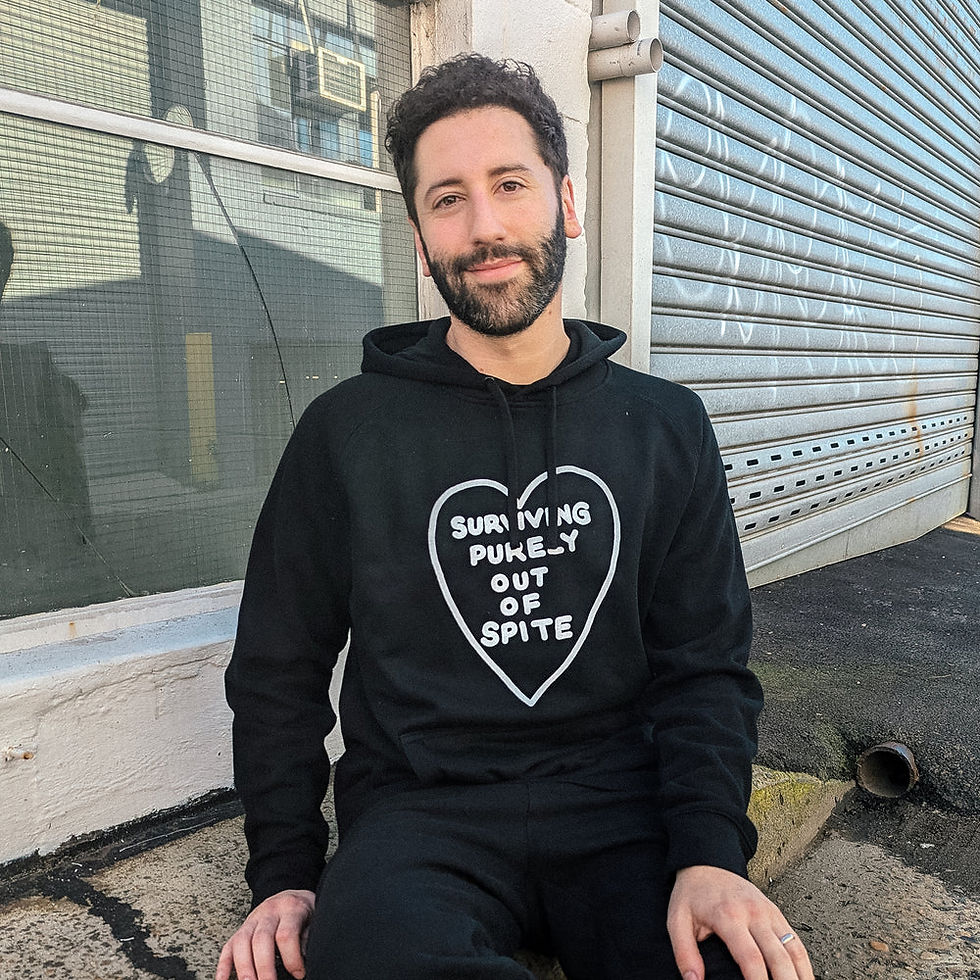
In 2011, while most aspiring fashion entrepreneurs were dreaming of launching the next big clothing label, Sydney's Warwick was studying construction, feeling thoroughly miserable and wondering what on earth he was doing with his life.
But he knew one thing. He wanted to make T-shirts.
So he did what any sensible young person with a promising career path ahead of them would do. He dropped out of his degree, found an artist in Melbourne whose work he loved and moved into a shed with him for a week.
And just like that, Lonely Kids Club was born.
Well, not quite. Because as anyone who has ever started a business will tell you, having a great idea and convincing people to part with their hard-earned money for it are two very different things.
"I started Lonely Kids Club in March 2011. At the time I was studying construction and was pretty miserable doing it," Warwick recalls.

"I knew I wanted to make T-shirts, so I dropped out, learned how to do it and found an artist in Melbourne whose work I loved. I lived with him in a shed for a week and we made the first batch of Lonely Kids Club designs."
What followed was less fashion empire and more entrepreneurial survival course.
Warwick dragged himself out of bed for 6am markets, snuck into fashion shows and sat outside gigs selling clothes from enormous plastic containers, often at cost price. To keep himself afloat, he took on freelance e-commerce and design work, pouring whatever he could back into the business.
For the first two years, very little went according to plan.
"The first couple of years were more or less a failure, but I was determined to make something work," he says.
Then, in a wonderfully unpredictable twist, a sloth changed everything.

Not an actual sloth, thankfully, but one of the brand's now-iconic sloth jumpers.
A customer bought one, posted a photograph in a Facebook group and suddenly the little Sydney label that had spent two years struggling to get noticed was attracting attention.
"The post went viral and suddenly people were recognising the jumper and talking about the brand," Warwick says. "It was the first product that really put Lonely Kids Club on the map, and I definitely did not see it coming."
Fifteen years later, Lonely Kids Club is still going strong, operating from its Artarmon studio with a team of four and a wonderfully eccentric collection of graphic tees, jumpers and designs that seem to have absolutely no interest in taking themselves too seriously.
And perhaps that's precisely why people love them.

There are birds, animals, memes, wonderfully obscure jokes and, for anyone who has ever felt the need to express their personality through a slightly ridiculous piece of clothing, plenty of opportunities to do just that.
Even the name has a story.
"Lonely Kids Club started as a personal joke between me and a friend. It was never meant to sound depressing or suggest the customers were all lonely," Warwick explains.
"For me it came to represent putting creativity and happiness ahead of what people expected you to do. I had dropped out of a degree to make T-shirts when a lot of people thought it was a terrible idea, so the name ended up fitting that decision pretty well."
Over time, however, something rather lovely happened. The name began to mean more than Warwick had originally intended.
What started as a joke became a community of people who didn't necessarily feel they fitted neatly into the usual boxes,
but shared a love of creativity, humour and wearing something a little different.

Some customers have been buying from the label for more than a decade, while younger shoppers are discovering it through social media, artwork and designs that might make perfect sense to one person and absolutely none to another.
And Warwick wouldn't have it any other way.
"Usually they have a sense of humour and enjoy wearing something a bit specific that might start a conversation," he says. "The common point is probably that they want clothing with some personality rather than something anonymous."
But behind the quirky designs and playful branding sits a surprisingly serious commitment to doing business differently.
While much of the fashion industry has spent the past decade chasing cheaper manufacturing, faster production and ever-increasing volumes of disposable clothing, Lonely Kids Club has taken a rather different approach.
Every order is printed, finished, packed and shipped from its Artarmon studio.

The blank garments themselves are manufactured overseas, predominantly by AS Colour, something Warwick is careful to distinguish from claiming the entire product is Australian-made. But the printing and fulfilment remain firmly in Sydney, and that's a decision he has no intention of abandoning.
"The shirts were always printed locally, but we brought the printing properly in-house close to ten years ago," he explains.
"Keeping that part local became more important as we grew because it gave us much more control over quality, working conditions, special requests and how much finished stock we produced."
Of course, maintaining a Sydney production operation isn't exactly the cheapest way to run a clothing business.
There's rent, equipment, maintenance, inks, electricity and wages, not to mention the considerable time involved in printing individual orders rather than importing thousands of finished garments.
Warwick knows he could potentially make more money by doing things differently. He just doesn't particularly want to.

"If the only aim was to squeeze as much profit as possible from every T-shirt, we would make very different decisions," he says.
"I would rather accept a smaller margin than build the business around cutting those things out."
It's a refreshing philosophy in an industry where the relentless pursuit of cheaper and faster has become something of a competitive sport.
Lonely Kids Club also operates on a print-to-order model, keeping blank garments in different colours and sizes and printing each design only when somebody buys it.
That means the studio doesn't need to produce hundreds of identical shirts and hope the world suddenly develops an overwhelming desire to wear them.
It also means Warwick and his artists have the freedom to create things that might appeal to a wonderfully specific audience.
"We do not need to convince hundreds of people to want the same magpie dressed as a cyclist before we can release it," he laughs.

And really, isn't that the sort of creative freedom we should all be fighting for?
The approach also helps reduce the amount of unwanted finished clothing, although Warwick is quick to point out that it doesn't eliminate waste altogether. The business still uses electricity, ink, packaging and blank stock, but avoiding large quantities of unsold printed garments makes a practical difference.
Equally important is the way the label works with independent artists.
Over the years, Lonely Kids Club has collaborated with creatives including Bridget Farmer, Kirsty McIntyre, Kayla Reay and Claire Harrison, alongside many others whose work Warwick genuinely admires.
Sometimes he discovers an artist through Instagram, sometimes they approach him, but the arrangement is built around something more meaningful than simply finding the next fashionable aesthetic.
Artists retain the rights to their work and receive a commission on every sale.
"Their art is a huge part of what people are buying, so it is important that they are treated and paid properly," Warwick says.
It's the sort of arrangement that sounds entirely reasonable until you consider just how much of the modern fashion industry depends on producing more for less.

And that's where the challenges of running a small independent label become particularly apparent.
Warwick says competing with ultra-cheap online retailers is neither realistic nor something he wants to attempt. His prices need to cover decent garments, local printing, fair wages and artist commissions.
Then there's the issue of copying.
According to Warwick, thousands of listings on Temu have reproduced Lonely Kids Club artwork, product descriptions, branding and photographs, offering products at prices his business could never match.
"The Temu situation made the difference especially obvious," he says.
It's a frustrating reality for independent designers who invest time, money and creativity into producing original work, only to see similar-looking products appear online for a fraction of the price.
Yet Warwick also believes consumers are becoming more conscious of where their clothing comes from and who benefits from their purchases.
He is realistic about the competing pressures, though.

"People can care about ethical production and still need to watch what they spend."
And despite the brand's success, the past 15 years haven't been without a few spectacular mistakes.
Take Velcro World, for example.
At one point, Warwick and his team decided it would be a brilliant idea to create an entire range of T-shirts and hats featuring interchangeable Velcro patches.
The patches could be moved between garments, offering customers the chance to customise their clothing.
In theory, rather clever.
In practice, an expensive disaster.
"We had the Velcro sewn onto everything by hand, the range completely tanked and we lost a lot of money clearing it out," Warwick admits.
But perhaps that's another reason Lonely Kids Club has survived when so many independent labels haven't. Warwick is willing to experiment, occasionally get things spectacularly wrong and keep going anyway.
There's also a more personal side to the business that extends well beyond clothing.
Mental health has long been an important part of the Lonely Kids Club story, with the label raising money for organisations including the Black Dog Institute and releasing designs that encourage conversations about mental health and accepting that it's okay not to be okay.
The brand has also supported LGBTQIA+ communities, animal welfare initiatives and causes brought forward by the artists and people around it.
Its Science Meets Gaming T-shirt, for example, directs 100 per cent of profits to Cure Cancer through Game On Cancer.
For Warwick, these collaborations aren't simply an opportunity to attach a worthy cause to a product.
"Mental health has always been personal to me and part of the brand," he says.
"I do not want charity work to feel like a marketing exercise. We try to be clear about where the money is going and follow through properly."
It's another reminder that the business Warwick created as an unhappy construction student has become something rather bigger than a collection of T-shirts.
Today, four people work behind the scenes at Artarmon, preparing garments, printing designs, pressing and curing prints, packing parcels and handling everything from customer enquiries to new artist collaborations.
Warwick is still involved in almost every aspect of the operation, and on any given day is just as likely to be packing an order as working on a new design or planning the next release.
After 15 years, he could perhaps be forgiven for wanting to step away from the day-to-day chaos.
But there's something about remaining close to the business that matters to him.
"I do not need to personally put every shirt in a parcel forever, but I do not want to become disconnected from how the work is actually done," he says.
And while he certainly wants Lonely Kids Club to grow, he's not particularly interested in building a fashion empire at the expense of everything that made the brand special in the first place.
He wants more people to discover the clothes, more opportunities for independent artists and more money raised for causes the team believes in. He also recognises the responsibility of keeping a business healthy when other people's livelihoods depend on it.
But there are limits to what he's prepared to sacrifice in the name of expansion.
"If growing meant giving up local printing, fair pay, artist commissions or the ability to make strange little designs we genuinely like, I do not think it would be worth it," he says.
"I would rather grow more slowly and still recognise the business at the end of it."
And perhaps that's the real success story here.
Not that a young bloke who abandoned his construction degree and spent a week living in a Melbourne shed managed to create a clothing label that survived 15 years.
Although, let's face it, that's a pretty good story in itself.
It's that somewhere between the 6am markets, the viral sloth, the disastrous Velcro experiment and the thousands of T-shirts printed in Artarmon, Warwick managed to build a business that still reflects the things he believed in when he started.
Creativity, independence, community and the freedom to do things a little differently.
Which, when you think about it, is a rather fitting achievement for something called Lonely Kids Club.
And not bad for a bloke who just wanted to make T-shirts.
Discover Lonely Kids Club at lonelykidsclub.com.


Comments