There's Something Fishy About Fish Oil: Are We Killing Krill for Nothing
As Australian retailers turn their backs on krill oil, a surprising alternative is emerging. And according to Australian biotech pioneer Mark Pages, we may have been looking for our omega-3 in entirely the wrong place.

For years, we've been told that omega-3 is good for us. Good for our hearts, our brains and just about everything else that keeps us ticking along.
And somewhere along the way, millions of us got into the habit of swallowing fish oil or krill oil capsules, often without giving much thought to where they came from.
After all, they're sold in pharmacies and supermarkets, come in reassuringly healthy-looking packaging and promise all sorts of wonderful things. What could possibly be the problem?
Well, quite a lot, as it turns out.
Because while we've been busy looking after our own health, scientists and environmental campaigners have been asking an increasingly uncomfortable question about the tiny Antarctic creatures we're harvesting to do it.
And now some of Australia's biggest retailers are taking notice.
Woolworths and Coles have confirmed they no longer stock krill oil products, while Blooms The Chemist has paused further purchasing as it reviews its range. Environmental groups including Sea Shepherd and the Bob Brown Foundation have been campaigning against commercial krill harvesting, arguing that the industry places unnecessary pressure on one of the world's most important marine ecosystems.

The supermarkets haven't publicly confirmed why they stopped selling the products, but the wider debate has put krill oil firmly in the spotlight.
Which raises an obvious question for anyone who's been taking it for years. If we're supposed to be getting our omega-3 from krill, what happens if we stop?
The answer is rather fascinating.
Because it turns out we never needed to get it from krill in the first place.

The tiny creature keeping Antarctica alive
Krill aren't exactly glamorous. They're tiny, shrimp-like crustaceans that spend their lives swimming around the Southern Ocean in enormous swarms.
But don't let their size fool you.
These little creatures are among the most important animals in Antarctica, providing food for whales, penguins, seals, seabirds and countless other marine species.
Without krill, much of the Antarctic food chain would be in serious trouble.
And that's where commercial harvesting becomes controversial.
Industrial fishing vessels target the enormous swarms of krill that gather in Antarctic waters, using sophisticated equipment capable of collecting vast quantities.
Unfortunately, those same swarms are precisely where hungry whales, penguins and other marine animals go looking for dinner.

Mark Pages, founder of Australian biotechnology company Phytality, has spent more than 20 years working with marine microalgae and sustainable, land-grown omega-3. He believes the growing demand for krill oil raises serious questions about the way we source our supplements.
“Krill is the foundational species of the entire Southern Ocean. Almost everything up the food chain relies on it. Whales, seals, penguins, and seabirds all depend on krill for their survival,” he explains.
As the Southern Ocean warms and sea ice continues to change, scientists are increasingly concerned about the combined pressures on Antarctic ecosystems.
And Pages argues that harvesting krill for supplements adds another, entirely avoidable pressure.
“Taking food directly out of their mouths for human dietary supplements just doesn't make sense, especially when it is unnecessary.”
It's a compelling point, particularly when you consider that most of us have never given a second thought to what goes into those little capsules.

Here's where it gets interesting
What many people don't realise is that krill don't actually produce the omega-3 we're taking them for. They get it from their food. And so do fish.
“Fish don’t make omega-3. They get it from the food they eat and accumulate it in their bodies,” Pages explains.
The original source of the long-chain omega-3 fatty acids EPA and DHA is marine microalgae, microscopic organisms that sit at the very beginning of the ocean food chain.
Krill feed on algae. Fish consume algae and other marine animals, and the omega-3 accumulates as it moves through the food chain.
“So ultimately, the omega-3 found in fish and krill can be traced all the way back to these tiny marine algae,” Pages says.
“Microalgae is the original source of all marine omega-3s. Fish and krill are simply the middle-fish.”
It's a wonderfully simple way of looking at something we've managed to make rather complicated.
We've been harvesting animals to obtain nutrients that originated somewhere else entirely.
So why not simply go straight to the source?
That's exactly what Pages and a growing number of biotechnology companies are doing.
Instead of harvesting fish or krill from the ocean, they're cultivating selected strains of marine microalgae on land and extracting the omega-3 oils they naturally produce.
And the science behind it is surprisingly straightforward.
The EPA and DHA found in algae oil are the same molecules found in fish oil. Research comparing the absorption of algae-derived omega-3 with fish oil has also produced encouraging results.
“The molecular structure of the omega-3 EPA and DHA found in microalgae oils is identical to that found in fish and krill oil,” Pages says.
Not every algae supplement contains the same balance of EPA and DHA, so consumers still need to check the label. But the important point is that marine animals are not essential to producing these nutrients.
For an industry that has spent decades selling us the benefits of fish and krill oil, that's a pretty significant development.

The discovery that changed everything
For Pages, the idea of producing omega-3 directly from algae wasn't something that happened overnight.
His interest began while working in green biotechnology in Europe, where he saw how successfully marine microalgae were being cultivated to feed young fish in aquaculture hatcheries.
It was 2009, and the technology was already proving itself.
But something about the process struck him as unnecessarily complicated.
“It struck me as absurd that we were growing this incredible nutrient source just to feed farmed fish, only to harvest the fish later for their oil,” he recalls.
The more he learned about algae cultivation, the more convinced he became that the same technology could be used to produce omega-3 directly for people.
“Seeing the innovation and advances in algae cultivation technology made me realise that if we scaled this directly for human nutrition, we could completely eliminate the reliance on ocean harvesting.”
Today, through Phytality, Pages is working to make that possibility a commercial reality.
And while growing marine algae on land might sound like something from a science fiction film, the process is surprisingly practical.
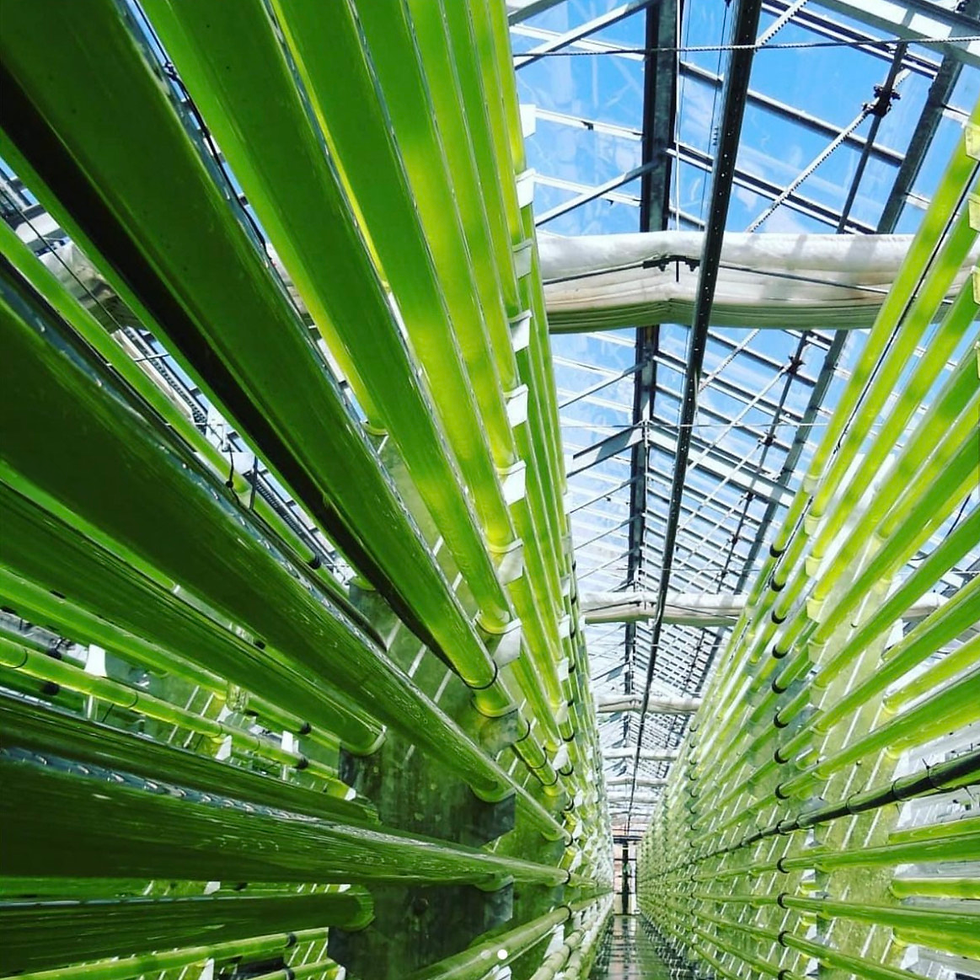
Microalgae can be cultivated in controlled environments, including enclosed tanks, tubes and specialised growing systems that manage temperature, nutrients, water quality and light.
Some facilities resemble laboratories. Others operate more like breweries, using carefully controlled production processes to grow algae consistently throughout the year.
The result is an alternative source of omega-3 that doesn't require catching marine animals.
Of course, growing algae is one thing. Producing a reliable, food-grade ingredient in commercial quantities is quite another.
“Growing algae is one thing. Growing it as a consistent, food-grade ingredient batch after batch, year-round, is a different challenge entirely,” Pages explains.
And that's where much of the innovation is now taking place.
Is algae oil actually better for the environment?
Naturally, there's another question worth asking.
If we're replacing ocean harvesting with industrial algae production, are we simply swapping one environmental problem for another?
Not necessarily, although Pages is quick to acknowledge that cultivating algae on land still requires resources.
Controlled growing systems use energy for lighting, temperature regulation and pumping, while water and nutrients must also be carefully managed.
The advantage, he argues, is that these inputs can be measured and controlled.
His company's production systems are designed to recycle water, while algae can also be cultivated using sources such as treated seawater rather than relying entirely on freshwater supplies.
And because the growing environment is controlled, producers can monitor quality and reduce exposure to some contaminants associated with marine environments.
There are potential climate benefits, too.
Pages points to a published life-cycle assessment comparing commercial algae-derived DHA with fish oil, which found that the algae oil had around 30 to 40 per cent lower climate-change impacts in the systems studied.
That doesn't mean every algae product automatically has a smaller environmental footprint. Energy sources, production methods and processing all make a difference.
But it does suggest that producing omega-3 without harvesting marine animals is becoming an increasingly realistic option.
And given the pressure already facing our oceans, that's an opportunity worth taking seriously.

But are Australians actually getting enough omega-3?
Here's another interesting part of the story.
While many of us have been diligently buying omega-3 supplements, research suggests a substantial proportion of Australians still fall short of recommended long-chain omega-3 intake targets.
One Australian study found that only around 20 per cent of the population met the recommended intake used by the researchers.
That's a remarkable figure considering how much attention omega-3 has received over the years.
EPA and DHA play important roles in the body, including supporting normal cell function, and they're particularly relevant during pregnancy and early development.
But not all omega-3 supplements are created equal.
A capsule labelled as containing 1,000 milligrams of fish oil, for example, doesn't necessarily provide 1,000 milligrams of EPA and DHA.
The amount of these specific fatty acids can be considerably lower, depending on the formulation.
And that's something Pages believes consumers should pay much more attention to.
“First, look at the actual EPA and DHA content, rather than simply the total amount of oil,” he advises.
He also recommends looking at where the oil comes from, how it's processed and whether the manufacturer provides clear information about purity and quality testing.
“Ultimately, I think consumers should be asking three simple questions: How much EPA and DHA am I actually getting? Where did it come from? And can the manufacturer demonstrate its purity, stability, quality and transparency?”
It's sensible advice, particularly in a supplement market where the biggest number on the front of the bottle isn't always the one that matters.

So what should you buy instead?
For anyone who's been taking krill oil for years, there's no need to panic.
Omega-3 can come from several sources, including oily fish and algae-based supplements.
The most suitable choice depends on your diet, nutritional needs and personal preferences.
Algae oil is particularly interesting for people who don't eat fish, prefer plant-derived supplements or want to reduce their reliance on marine animal products.
But there's one important detail to check.
Some algae oils are particularly rich in DHA, while others contain EPA or a combination of both. If you're replacing an existing supplement, compare the actual amounts rather than assuming they're identical.
Quality matters, too.
Look for manufacturers that provide information about purity, oxidation testing and the amount of EPA and DHA in each serving. And if you're taking omega-3 for a particular medical reason, it's worth checking with your health professional before changing products.
As for krill oil, the environmental debate is unlikely to disappear anytime soon.
Chemist Warehouse was still reported to be stocking krill oil in September, despite growing pressure from campaigners, while other retailers have already stepped away from the category or begun reviewing their ranges.
Whether more will follow remains to be seen.
But perhaps the bigger question isn't which retailer will stop selling krill oil next.
It's whether we need to keep harvesting krill for supplements at all.

A different future for omega-3
For decades, the supplement industry has relied heavily on extracting omega-3 from marine animals.
And for much of that time, there were few commercially practical alternatives.
But biotechnology is changing what's possible.
As algae cultivation becomes more sophisticated and production increases, Pages believes the cost of producing algae-based omega-3 will eventually become competitive with conventional marine oils.
“Historically, producing algae oil was always more expensive to produce than fish oil. But as production scales up and biotech innovation continues, the cost of production is dropping steadily.”
He believes that in another decade or two, the idea of harvesting wild marine animals simply to extract nutrients we can produce on land may seem remarkably outdated.
“Looking back in a decade or two, harvesting wild marine animals just to squeeze out an oil we can grow cleanly on land is going to look like an outdated, unnecessary practice.”
It's an optimistic prediction, certainly, but one that raises an interesting question about the future of the supplement industry.
We've spent years taking nutrients from fish and krill, when the organisms responsible for producing those nutrients have been sitting at the beginning of the marine food chain all along.
Sometimes the smartest innovation isn't inventing something new.
It's realising we've been taking the long way around.
And if we can get the omega-3 we need without taking food away from the whales and penguins that depend on it, surely that's worth thinking about the next time we reach for a bottle of supplements.



Comments